

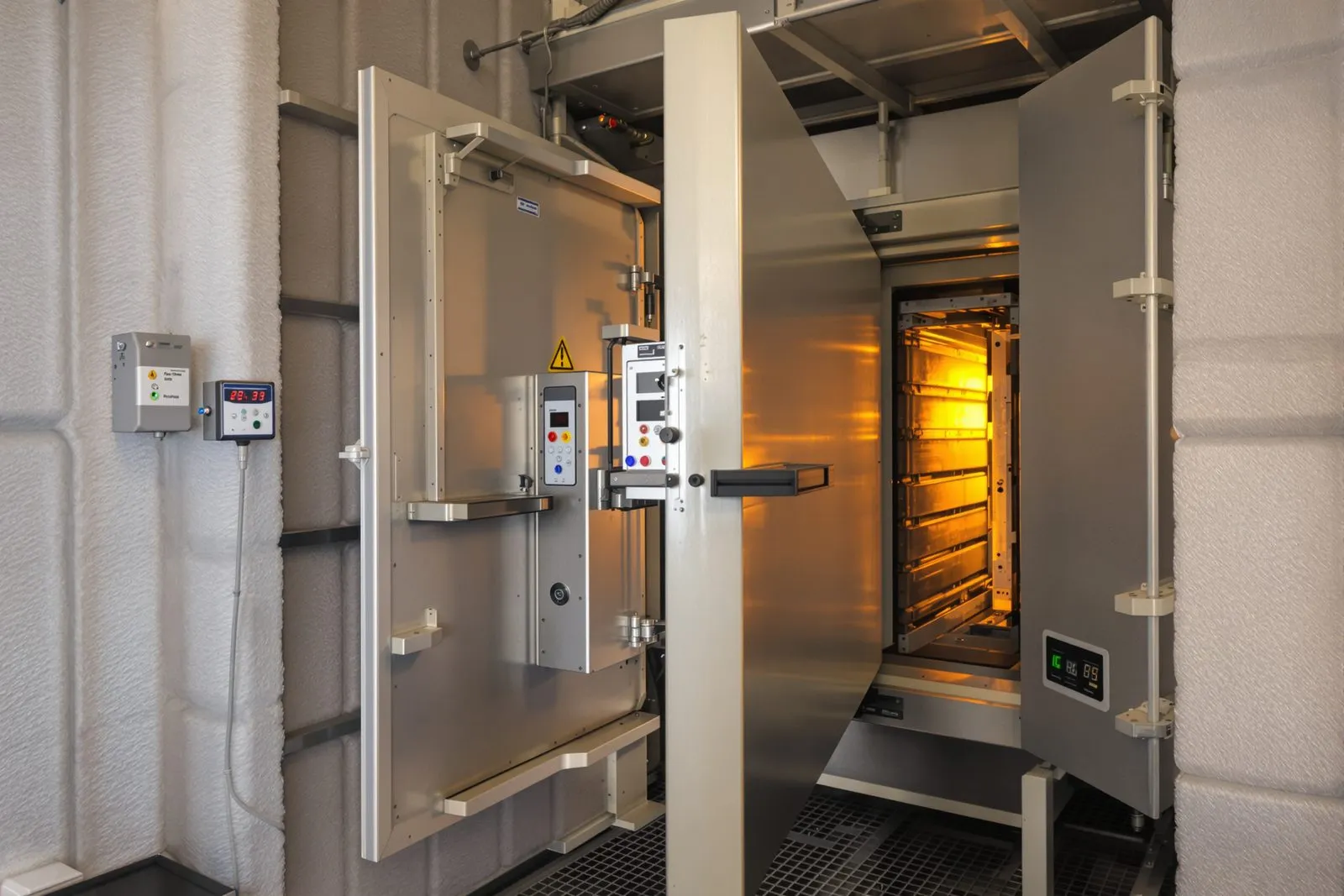
Seven Ways to Save Energy in Industrial Furnaces
Practical ways to cut fuel and electricity use in furnaces and kilns, from better insulation to tighter doors and seals.
Industrial furnaces use a lot of energy, and energy is one of the biggest costs of running them. The good news is that a large part of that energy is lost in ways you can see and fix. Here are seven practical steps, starting with the ones that usually pay back fastest.
1. Check the insulation
Heat that passes through the walls is lost for good. Signs of a weak lining:
- the outer steel shell is hot to the touch, or has hot spots,
- the furnace takes longer to reach temperature than it used to,
- you can see cracks, gaps or shrunken insulation inside.
Repairing or upgrading the lining with ceramic fibre insulation is often the single biggest saving. A simple infrared temperature gun pointed at the outer shell shows where the worst losses are.
2. Use a light lining in batch furnaces
In a furnace that heats up and cools down every day, a lot of energy goes into heating the walls themselves, not the load. Heavy firebrick stores a lot of heat; ceramic fibre stores very little. Replacing the hot face with fibre modules or board can cut heat-up time and energy use a lot.
3. Seal doors and openings
A gap around a door at 1,000 °C loses heat all day long. Check door seals regularly and replace worn rope, tape or ceramic paper gaskets. Close sight holes and unused openings. Keep the door shut as much as the process allows.
4. Load the furnace well
- Run the furnace full when possible. A half-empty furnace uses nearly the same energy as a full one.
- Use light kiln furniture and setters, so less energy goes into heating supports.
- Plan production to avoid long idle times at high temperature.
5. Look after the heating elements
In electric furnaces, aged or badly connected elements waste power and heat unevenly. Check connections, measure voltage and current, and replace ageing elements in good time. Our maintenance guide explains how.
6. Tune the burners (fuel-fired furnaces)
Too much air in the burner means a lot of hot air goes up the chimney. Too little means unburnt fuel. Have the burners checked and adjusted so the air-to-fuel ratio is right. Where possible, use the hot exhaust gas to preheat the air or the load.
7. Measure and keep records
You cannot save what you do not measure. Keep a simple record of energy use, production and furnace temperature. Changes in energy per tonne of product show you when something is going wrong, and prove when a fix has worked.
Where to start
If you only do one thing, start with the lining and the door seals. They are often the largest losses, and they are fixed with simple materials.
| Step | Typical cost | Typical effect |
|---|---|---|
| Door and opening seals | Low | Quick, noticeable saving |
| Lining repair | Low to medium | Large saving where the lining is damaged |
| Fibre hot face in batch furnaces | Medium | Faster heat-up, less energy per cycle |
| Element care | Low | Even heating, fewer breakdowns |
| Burner tuning | Low | Less fuel for the same heat |
We can help
Tell us about your furnace, its size, working temperature and current lining, and send a few photos. We will suggest the insulation and materials that fit. Contact us.
Related Articles
Ceramic Fibre Insulation: Blanket, Board or Paper?
Ceramic fibre comes as blanket, board, paper and more. Here is what each form is good at, and how to pick the right grade.