

Silicon Carbide or MoSi2: Choosing the Right Heating Element
A plain comparison of the two main ceramic heating elements: temperature, life, cost and what your power supply needs.
For electric furnaces that run hotter than metal wire elements can handle (roughly above 1,200 °C), there are two main choices: silicon carbide (SiC) and molybdenum disilicide (MoSi2). Both are ceramic, both work in air, and both are used all over the world. But they behave quite differently. This article helps you choose.
The short answer
- Furnace temperature below about 1,450 °C: silicon carbide is usually the simpler, cheaper choice.
- Furnace temperature above about 1,500 °C, or you need very fast heating: choose MoSi2.
- In between, the details below decide.
Side by side
| Silicon carbide (SiC) | Molybdenum disilicide (MoSi2) | |
|---|---|---|
| Typical highest furnace temperature in air | About 1,450–1,500 °C | About 1,600–1,750 °C |
| Shape | Rigid rods, U, W and spiral tubes | Mostly U and W shapes, hanging |
| Mounting | Horizontal or vertical | Usually vertical (soft when hot) |
| Strength when cold | Strong | Brittle, handle with care |
| Resistance over time | Slowly rises with age | Almost stable |
| Replacing | Best in matched sets | Single elements are fine |
| Power supply | Must allow voltage to rise over time | Must limit the high starting current |
| Weak range | Ages faster near its top temperature and in steam | ”Pest” if held long at about 400–700 °C |
| Price | Lower | Higher |
Temperature
This is usually the first filter. If your process needs 1,600 °C or more, SiC is not an option, and MoSi2 is the standard answer. For tile kilns, glass annealing and most heat treatment, SiC covers the range with room to spare.
Life and ageing
SiC elements age slowly: their resistance goes up as they are used. The furnace keeps the same power by raising the voltage over time. When the voltage cannot go any higher, the elements are changed. Running them a little below their maximum temperature adds a lot of life.
MoSi2 elements keep almost the same resistance for their whole life. They do not “wear out” in the same way, but they can be damaged by handling, by long holding in the 400–700 °C range, or by some atmospheres and contaminants.
Power supply
The two types need different power control:
- SiC: a transformer with several voltage steps (taps) or a thyristor controller with enough spare voltage for ageing.
- MoSi2: very low resistance when cold, so the controller must limit the current at start-up. A transformer plus thyristor control is normal.
If you change from one type to the other, the power supply often has to change too. Check this before you buy.
Furnace design
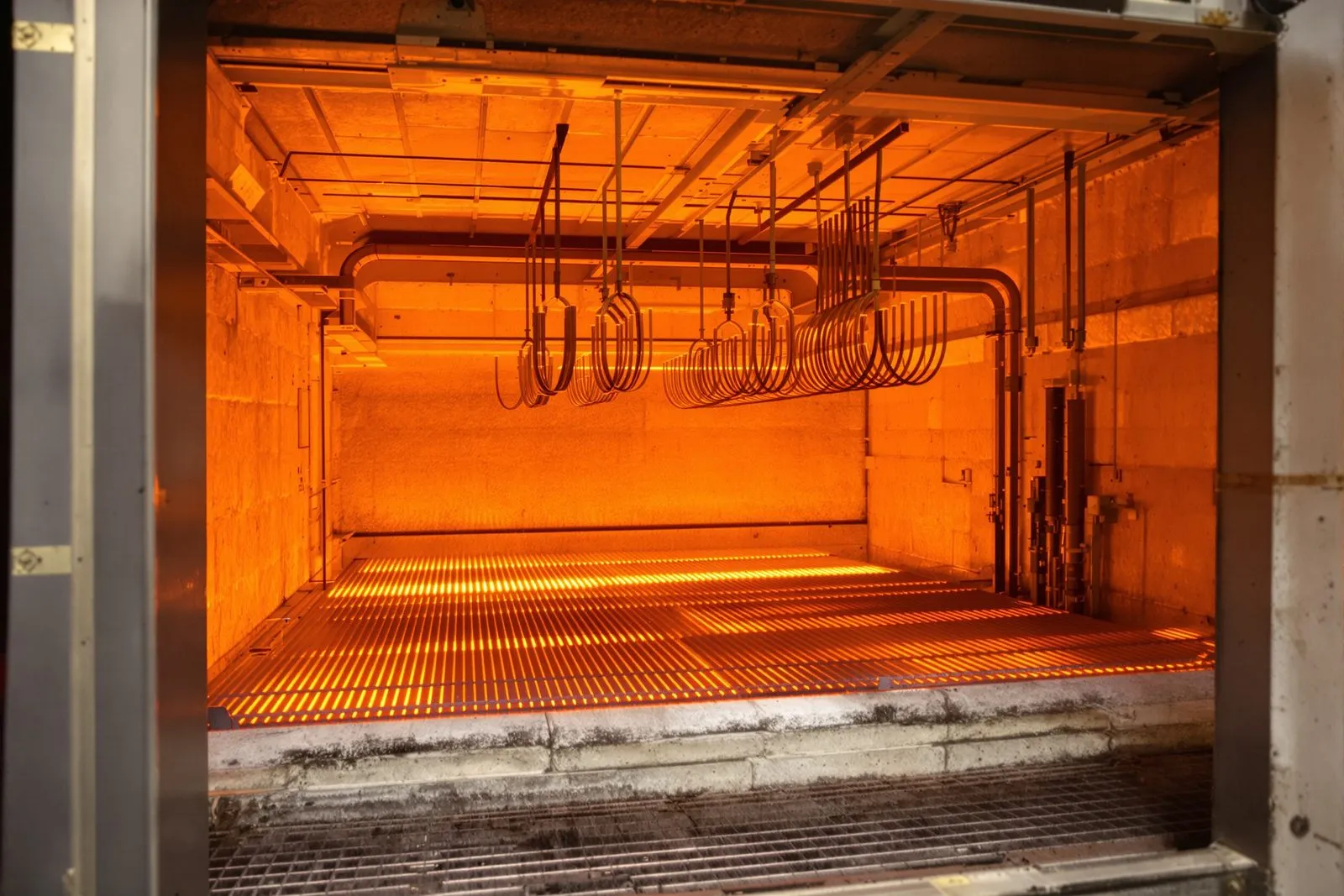
SiC rods are rigid and can span a furnace horizontally, through holes in both side walls. MoSi2 elements soften when hot, so they usually hang from the roof. Changing type in an existing furnace is possible but needs planning.
Cost
SiC elements cost less to buy. MoSi2 elements cost more, but in very hot or fast-cycling furnaces they can be cheaper in the long run because they last longer and save energy. Look at the total cost over a few years, not just the price of one element.
Still not sure?
Send us your furnace type, highest temperature, atmosphere, heating cycle and the power supply you have. We will tell you which element fits best. See our silicon carbide elements and molybdenum elements, or contact us.
Related Articles
MoSi2 Heating Elements: How They Work and Where to Use Them
How molybdenum disilicide elements reach very high temperatures in air, what they are good at, and what to watch out for.
How to Make Furnace Heating Elements Last Longer
Simple checks and habits that help silicon carbide and MoSi2 heating elements last longer and fail less often.