

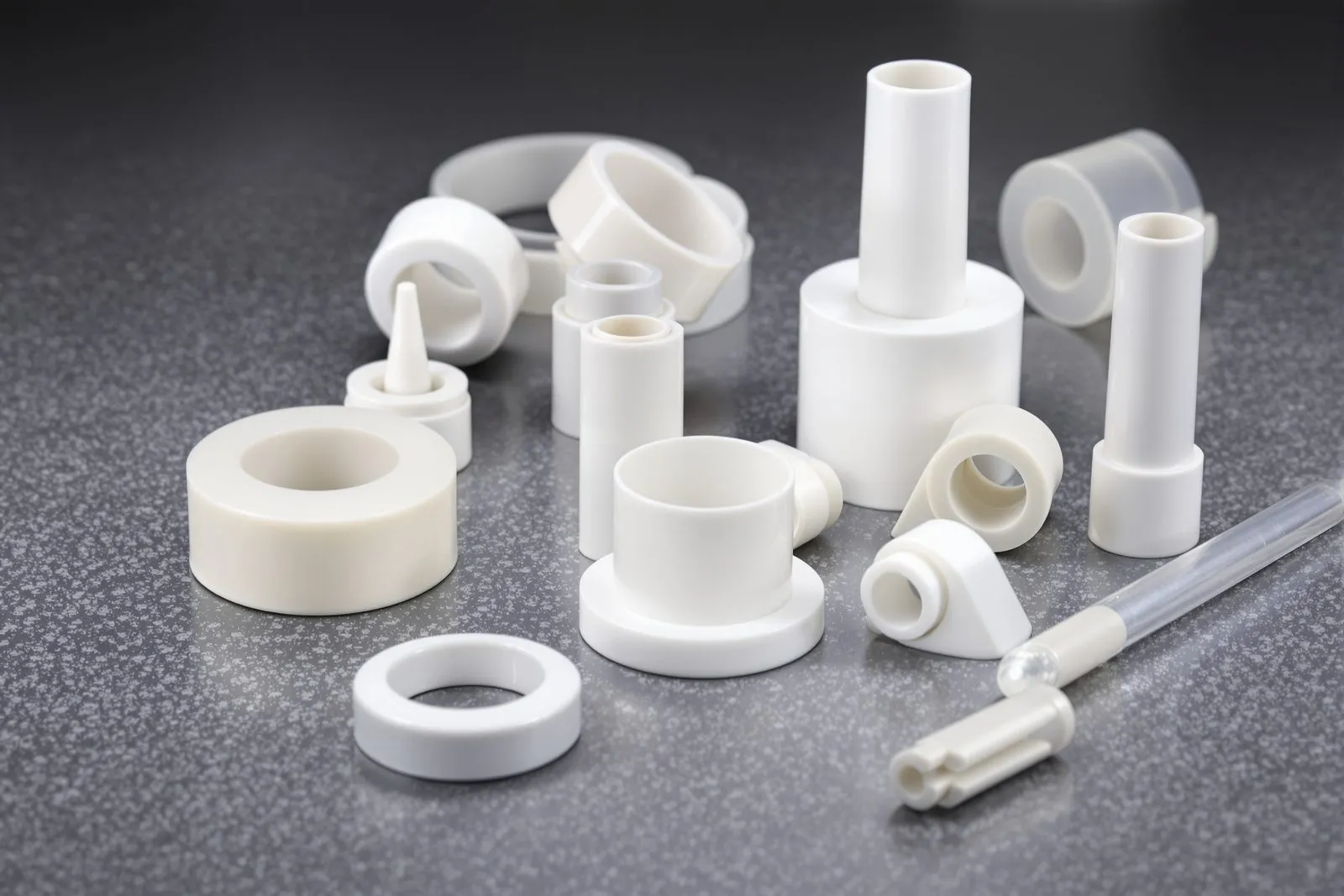
Technical Ceramics in Industry: A Practical Guide
Alumina, zirconia, silicon carbide and more: what technical ceramics are, how they differ, and where each one works best.
When people hear “ceramics”, they think of plates, cups and tiles. In industry, the word often means something else: technical ceramics, hard materials made for furnaces, machines and electrical parts. They do jobs that metals and plastics cannot do, mainly because they handle heat, wear and chemicals so well.
This guide explains the main types in plain words, so you can talk to a supplier with confidence.
What makes a ceramic “technical”
Technical ceramics are made from very pure, carefully controlled powders. The powder is shaped (by pressing, casting or extruding), then fired at high temperature until the grains bond into a dense, hard solid. Because the raw material and firing are controlled, the final part has known and repeatable properties: strength, hardness, electrical behaviour and heat resistance.
Most technical ceramics share a few strong points:
- Heat resistance. Many keep their strength well above 1,000 °C.
- Hardness. They are far harder than steel, so they resist wear.
- Chemical resistance. They do not rust and resist most acids and alkalis.
- Electrical insulation. Most do not conduct electricity, even when hot.
And one weak point: they are brittle. A ceramic part does not bend before it breaks, so it must be designed and handled with care.
The main materials
Alumina (aluminium oxide)
Alumina is the most widely used technical ceramic. It is hard, strong, a very good electrical insulator, and not expensive. Higher purity (for example 95% or 99%) gives better performance at high temperature. You find it in furnace tubes, protection tubes for temperature sensors, element holders, wear liners and electrical insulators.
Zirconia (zirconium oxide)
Zirconia is the toughest common ceramic: it resists cracking much better than alumina. It is used for cutting tools, pump parts, valve seats and crucibles for very hot metals. It costs more, so it is chosen where toughness really matters.
Silicon carbide
Silicon carbide (SiC) is extremely hard, conducts heat well, and keeps its strength at very high temperatures. That is why it is used for heating elements, kiln shelves, burner tubes, rollers and wear parts. It also handles thermal shock better than most ceramics.
Mullite and cordierite
These materials expand very little when they heat up. That makes them good against thermal shock (cracking from fast temperature changes). They are common in kiln furniture, setters and ceramic rollers.
Steatite
Steatite is a low-cost ceramic used mostly as an electrical insulator: bead insulators on heater wires, terminal blocks, and supports in electric heaters.
Quick comparison
| Material | Heat | Toughness | Wear | Thermal shock | Cost |
|---|---|---|---|---|---|
| Alumina | High | Medium | High | Medium | Low |
| Zirconia | High | Very high | High | Low to medium | High |
| Silicon carbide | Very high | Medium | Very high | High | Medium |
| Mullite / cordierite | High | Low | Medium | Very high | Low |
| Steatite | Medium | Low | Medium | Low | Very low |
How to choose
Start from the job, not the material. Ask:
- How hot does it get, and how fast does it heat and cool? Fast changes point to mullite, cordierite or silicon carbide.
- Does it rub against something? Wear points to alumina, zirconia or silicon carbide.
- Must it insulate electricity? Choose alumina or steatite, not silicon carbide.
- Will it be hit or loaded? Toughness points to zirconia.
- What is the budget? Alumina is often the best balance.
Design tips for ceramic parts
- Avoid sharp inside corners; use a small radius instead.
- Keep wall thickness even.
- Let parts expand freely when they heat up. Do not clamp them tight.
- Use soft gaskets (such as ceramic paper) between ceramic and metal.
Conclusion
Technical ceramics are not one material but a family. Picking the right one can make a part last many times longer. If you are not sure which one fits your job, send us a drawing or a photo and tell us the conditions. Our industrial ceramic parts page lists what we can supply, or you can contact us directly.
Related Articles
Ceramic Rollers in Roller Kilns: Choosing and Caring for Them
How to choose ceramic rollers for tile and glass kilns, why rollers bend or break, and how to make them last longer.
Ceramic Foam Filters in Metal Casting: A Simple Guide
How ceramic foam filters clean molten metal, how to pick the material and pore size, and where to put them in the mould.